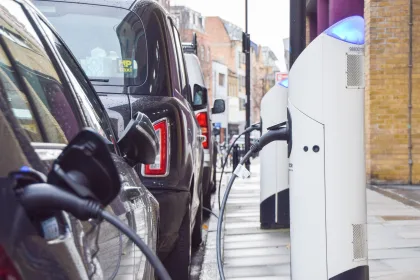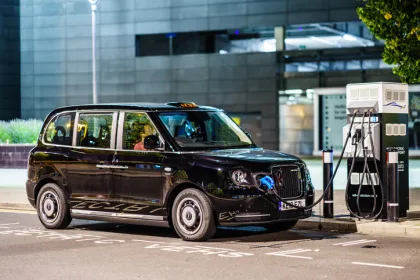
One day, every vehicle on British roads will be an EV. Range anxiety will be a thing of the past and charging stations will replace petrol stations. Until then, the reality for most taxi drivers and others who drive for a living is that they face a compromise.
More EVs sold
As the drive towards net-zero continues, with the ban on the sale of new petrol and diesel vehicles just five years away, it is encouraging that EV sales have increased by 20% in the past year.
Fleet Point reports that Department for Transport figures for 2024 show there were 2,605,000 vehicles registered for the first time, an increase of 3% on 2023’s figures. It also shows that 410,000 zero-emission vehicles registered for the first time – an increase of 20% – and of these, 382,000 were zero-emission cars, representing an increase of 22%.
However, the figures also revealed that people with older cars are continuing to hold on to them. It found that the average age of a car remains at 10 years compared to the eight years before the pandemic.
The figures show that at the end of December, 2024, there were 41.7 million licensed vehicles on our roads, an increase of 1% on 2023. This includes 1,394,000 licensed zero-emission vehicles, representing an increase of 37%, of which 1,287,000 are cars, representing an increase of 38%.
Sales speeding up
Vehicle licensing statistics, United Kingdom: 2024 show that at the end of 2024, zero-emission vehicles accounted for 3.4% of all road-using vehicles, an increase of 0.9% from the end of 2023.
This means that while Britain is on course for greener motoring, we still have a long way to go. The main reasons are that a taxi driver – or other professional driver – who currently operates a £20,000-£30,000 vehicle, knows exactly how far they will get on a tank of petrol or diesel and what it will cost, including road tax, taxi insurance, maintenance and servicing.
As well as being put off by the initial cost of new EVs, many feel there isn’t currently much of a choice of affordable, comparable EVs available, especially in the second-hand market. This will change as more EVs are produced and technology improves, making them more suitable and affordable.
Road to change
Jack Cousens, the AA’s head of roads policy, told Fleet Point: “The march of the electric vehicles continues, with the registration of new electric cars boosted by more than 22% in the past year to make them 19.1% of all new cars sold. The transformation of the UK car population is clearly happening.
“However, a combination of financial pressures on car owners and the legacy of 2017’s switch to a standard rate of Vehicle Excise Duty, has led to owners of older cars clinging on to them. With standard car tax now at £195 a year, hanging on to a vehicle that could be paying as little as £20 a year in tax is a huge incentive.”
“Overall, today’s figures present a mixed picture with a leap in those embracing new technology, whilst others were holding on to their older vehicles longer perhaps reflecting the economy and reticence to go electric.”