
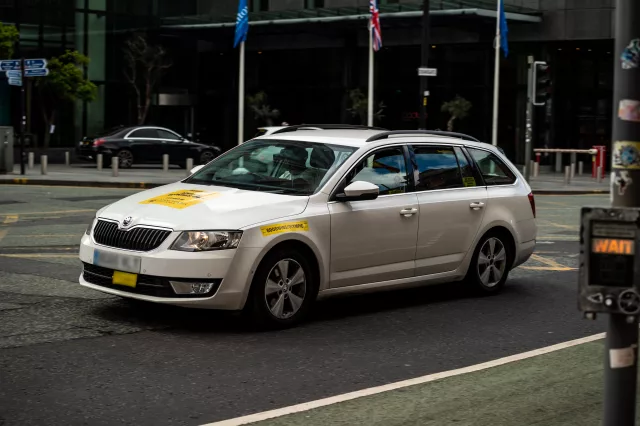
The issue of cross-border working continues to polarise the taxi and PHV trade — those in favour say it gives them flexibility and sustainable work, while those who oppose it say it threatens local livelihoods and means authorities are unable to maintain regulatory standards.
Scrutiny
The issue featured prominently last month before the House of Commons Transport Committee where an amendment to the government’s Devolution Bill, tabled by Heywood and Middleton North MP Elsie Blundell, looked to pave the way for a ban on cross-border working.
In the end, the amendment was dropped by the government, but Greater Manchester Mayor Andy Burnham has pledged to carry on the fight in the House of Lords.
Giving evidence to the Transport Committee last month, the Unite union, GMB, National Private Hire and Taxi Association (NPHTA), and the Licensed Private Hire Car Association (LPHCA) outlined the problems they are facing.
Taxi Point reports that Unite’s Paul James called the current structure “broken and needs fixing”, blaming successive governments for failing to act.
David Lawrie, of the NPHTA, said that “flooding of many regions” with out-of-area drivers was reducing earnings and forcing drivers to work excessive hours. “That means that the cost and the income for the drivers are massively reduced, which then means they have to work longer hours in order to comfortably maintain a living wage.”
And the LPHCA‘s Andy Mahoney said licensing was “a mess”, with more than 270 licensing authorities operating different rules. He said: “The solution has to be one single, absolute, national standard for licensing and enforcement. That way, everybody works on the same level.”
Winners and losers
The committee also heard about a widening gulf between national app-based operators and local taxi and PHV firms.
Taxi Point reports that representatives from Uber, Bolt, Veezu and independent operator Vokes Taxis delivered “detailed and differing accounts of whether cross-border working strengthens or undermines the sector”.
“For national platforms, cross-border operation is a functional necessity. For local operators and some councils, it is the root cause of declining standards, enforcement failures and an erosion of public confidence.
“This evidence session showed that the issue is no longer a technical licensing debate but a structural question about who holds authority in a system increasingly reshaped by national platforms. Councils, especially those with limited resources, argue they have lost the ability to enforce local standards. Platform operators argue the system must modernise to match travel patterns and passenger expectations.”
Fighting their corners
Uber and Bolt argued that cross-border working is a response to the needs of passengers today.
Bolt Senior General Manager Kimberly Hurd used London as an example. She said: “There are 32 boroughs in London and there is one consistent standard and one licence across it.”
She said that speed and cost drive the licensing choices made by drivers who are licensed out of town, not lower safety standards.
Both platforms rejected calls to reinstate the ABBA principle, which requires a driver, vehicle and operator to be licensed by the same authority.
Emma O’Dwyer, Uber’s Director of Public, said it would reduce reliability and push drivers towards central zones — a pattern already seen in Scotland, which causes issues for more remote communities.
But Medway-based Vokes Taxis argued that cross-border hiring is “undermining local regulation”, with co-owner Mark Robinson dismissing the claim that cross-border trips reflect natural travel patterns.
He told the committee: “Some 95 per cent or more of our journeys — probably 97 per cent or 98 per cent of our journeys — originate within the Medway towns or they end in the Medway towns.
“We see a situation where many vehicles that are not licensed in Medway come in and operate. They operate without any oversight whatsoever.”
He said that while the police can take action against an out-of-town driver operating without the correct taxi insurance or MoT, only the licence-issuing authority has any regulatory power over them.
He added: “The local authority does not have any ability or authority to even inspect those vehicles. We are not just talking about journeys that cross borders; we are talking about drivers who deliberately work in a different area from which they were licensed and can do so without any oversight.”
“If cross-border hiring was taken out of the equation, you would have local authorities enforcing over vehicles and drivers that are licensed in their authority. That system worked for many years.”