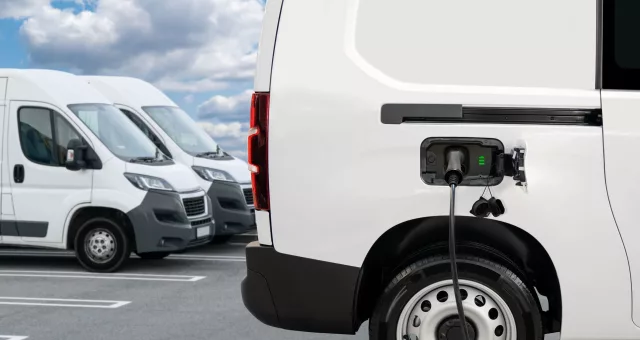
Ongoing improvements in technology are expected to accelerate sales of electric vans this year, as well as driving down costs.
Concerns about range and payload capabilities have been holding back many fleets from making the switch to electric. But as Motor Trade News reports, with the ban on the sale of new petrol and diesel vehicles just four years away, this is expected to be the year we see real change, with an extra 15,000 electric vans predicted on our roads.
Advances
The biggest concern for fleet operators is making sure an electric van can at least match the performance delivered by current diesel models. The key factors are capacity and operating costs.
EV leasing company DriveElectric told Motor Trade News that it expects 2026 to be the year we see the biggest change with van fleets as range and capacity increase and costs come down. This is a key consideration for fleet owners who are already dealing with rising costs, such as fleet insurance.
DriveElectric predicts that electric van sales will “increase by 50% in 2026, driven by increasing ranges and payload capacities”.
It noted that 30,169 electric vans were sold in 2025, making up 9.5% of the market share. But it said that the “increasing amount of electric van models with a range of over 200 miles and a payload of more than one tonne will increase viability for fleets, enabling for around 45,000 sales in 2026”.
More choice
The leasing company also predicted 580,000 electric car sales in 2026, up from 473,348 in 2025.
It said the big drivers behind this are the lower benefit-in-kind rates and the continued popularity of salary sacrifice among staff.
The other major factor is lower costs. As with vans, DriveElectric expects new models from China and South Korea, as well as lower battery costs, to bring EV prices closer to petrol cars in 2026. This is the assurance many people have been waiting for.
Adam Kemp, partnerships director at DriveElectric, said: “There are a range of factors which will provide the opportunity for increasing numbers of motorists to make the switch to EVs in 2026, including the Electric Car Grant, continued incentives for fleet customers, interest rates reducing, and an extremely competitive EV market space offering more affordable models with longer driving ranges.
“But it’s electric vans that promise to be the really interesting story in 2026, with our forecasts showing a 50% increase in registrations, thanks to longer driving ranges and more affordable pricing for new models, such as the Kia PV5.”
Better value
Taking electric vans cited by DriveElectric an example, the Kia PV5 Cargo starts at £27,645 (+VAT) offering 4,420L capacity cargo space, and has a range of 258 miles. Fast-charging ability means drivers can reach 80% charge within 30 minutes.
Those making stops for deliveries could theoretically cover up to 500 miles in a day allowing for a 30-minute charge during their lunch break.
For those carrying passengers, the PV5 Passenger model has a range or 256 miles and can reach 80% of charge within 30 minutes. It is available as five or seven-seater, with prices starting at £32,995.
It is progress in range, capacity and price that will be the biggest factors in fleets making the switch to electric, especially when it comes to vans.
Owners and operators also need choice, whether it is a particular make or model, or having options such as extended range or extra payload that allow them to carry out the day-to-day functions of their business.