Paying for a replacement EV battery that could cost more than the car is worth has been a fear for many people considering making the switch to electric, especially in the used-car market.
Experts say EV batteries are more reliable and durable than many people think, and fears of being stuck with a dead EV battery have been “hugely overblown”.
The questions for motor traders are does it matter to buyers and is it a risk worth taking?
Battery condition
Research from Startline has found that 57% of used-car buyers would only go ahead with the purchase if there was an independent check of the vehicle’s battery condition.
The motor finance group’s August Used Car Tracker also showed that 77% of used EV buyers are worried about potential battery failure and 76% about the cost of battery repair or replacement.
Experts believe the fears are unfounded, but understand that many buyers aren’t prepared to take any chances.
Startline CEO Paul Burgess told Motor Trade News: “With more than two million EVs now on UK roads, it’s becoming clear that early fears over battery failure have been hugely overblown. In fact, it is proving to be a fairly rare occurrence.
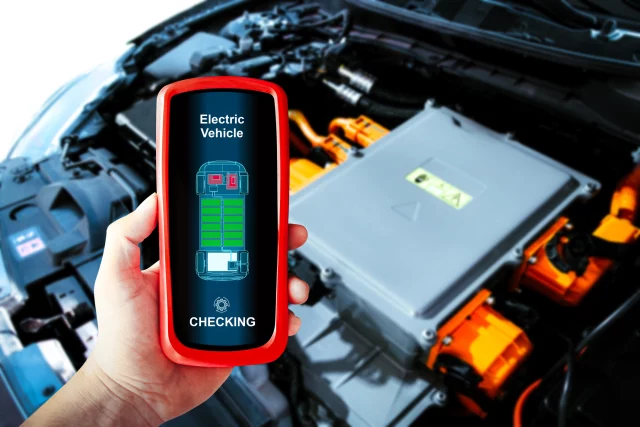
“Despite this, it is a possibility still clearly playing on the minds of potential electric car buyers and professional battery health checks, which are being offered by a range of companies, could play an important role in creating a sense of security.
“Our research shows that for a significant proportion of motorists, a check would be a key element in choosing to go electric, providing a high degree of reassurance about the possibility of battery failure.”
Reassurance
In the same way that motor traders check petrol and diesel vehicles they are considering adding to their stock, a healthy battery certificate can help them asses the value of the vehicle, as well as any risks, before offering it to potential customers.
Buying an EV without knowing the condition of the battery’s health means they could be left with an expensive bill to replace it. While motor trade insurance may cover EV batteries for accidental damage, fire, and theft, it does not usually cover normal wear and tear and degradation.
As well as avoiding that costly headache, an independent battery health certificate gives potential customers peace of mind and can potentially avoid any reputational damage caused to a dealership by battery problems with an EV they have sold.
Having that peace of mind is important for 31% of used EV buyers, with Startline reporting that they would buy a used EV without a battery health certificate as long as it had “a significant portion of its original manufacturer battery warranty remaining”.
However, if the price is low enough, 13% of buyers would take their chances and 9% said they would not need a battery health check as long as the EV came from a reputable dealer.
Just 7% of respondents did not want a battery health check at all.
Mr Burgess explained: “Most manufacturer warranties run for around eight years, so a significant proportion of people in the market for an older car might be happy to buy without a check.”
Future
The survey also offers motor traders an insight into buyers’ attitudes towards EVs and what they will buy as we approach 2030 and beyond.
When it comes to buying a used car today, 37% would buy petrol, 15% diesel, 26% would choose hybrid and 26% electric.
When it comes to buying their next car, 30% will choose petrol, 18% diesel, 31% hybrid, 21% electric.
Looking to their next purchase after that, 22% will be buying petrol, 13% diesel, 29% hybrid and 36% will opt for electric.
Startline found that 68% of buyers said running costs would be the main factor to influence their choice of car, with 55% citing cost of living.
The environmental impact was a key factor for 27% and 18% said charging infrastructure would influence their choice.
Whether it is petrol, diesel or electric, used-car customers still want something reliable and affordable, with the knowledge that the dealership can support them with maintenance and any issues that arise.