Thousands of drivers and businesses will benefit from lower prices as they make the switch to EVs following the extension of the Plug-in Van and Truck Grant.
Commercial transport is responsible for more than a third of CO2 emissions on UK roads and it is crucial for the government to hit its environmental targets that businesses in the motor trade are supported in make the transition to electric.
The grant, which offers discounts up to £2,500 for small vans, £5,000 for large vans, £16,000 for small trucks, and £25,000 for large trucks, was due to end in April, 2026. But Future of Roads Minister Lilian Greenwood has confirmed the grant will continue through to at least 2027, with levels for the 2026 to 2027 financial year to be confirmed.
Switch for savings
The Government calculates that by switching to electric, businesses could save more than £2,800 annually on fuel alone according to industry figures. This helps companies cut costs, expand sustainable operations, and build stronger supply chains.
It anticipates that the UK logistics sector – which employs 1.2 million people and generates over £79 billion annually for the economy – will benefit from this smoother transition, creating jobs and business opportunities whilst helping keep the UK on track to becoming a clean energy superpower.
Individual drivers can also benefit from the grant, making it cheaper to buy an electric van.
Lilian Greenwood said: “Extending these grants is another decisive step to power Britain’s transition to cleaner transport while backing the industries that keep our economy moving, driving new investment in EVs and helping businesses cut costs and expand.
“Every EV on our roads means healthier communities and new economic opportunities across the country, which is why grants like these are crucial to both accelerating that transition and building a resilient, competitive economy.”
Confidence
The government hopes that by extending the grant extension, fleet operators will have the certainty they need to confidently plan their electric vehicle purchases.
Businesses which depend on transport fleets are pleased with the extension of the grant.
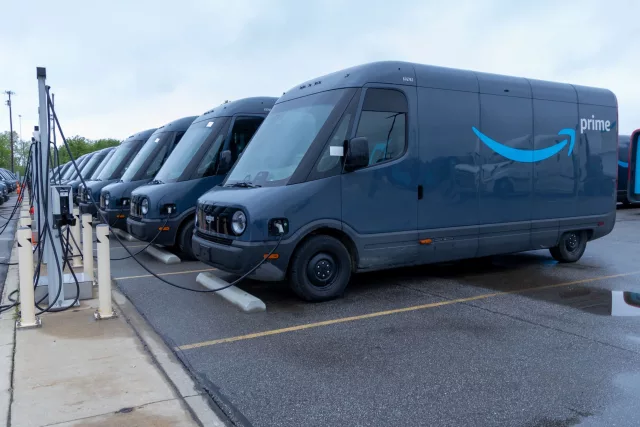
John Boumphrey, UK Country Manager at Amazon, said: “We welcome the government’s continued commitment to supporting the electrification of commercial fleets. Decarbonising the transportation network is a critical step to enable us to achieve our goal to reach net-zero carbon emissions across our operations by 2040.”
Checkatrade CEO Jambu Palaniappan said: “This news is a big boost for tradespeople across the UK. Lower running costs, freedom from charges like ULEZ, and the ability to plan ahead with confidence — it all adds up to real, practical support. For many Checkatrade members, with help to switch to electric vans, they can keep moving, win more work, and build a future that’s both cost-effective and sustainable.”
Removing barriers
And the Society of Motor Manufacturers and Traders, one of the largest and most influential trade associations in the UK, agrees.
Chief executive Mike Hawes said: “Extending the Plug-in Van and Truck Grant until 2027 will help increase zero-emission uptake in the critical commercial vehicle sector, much of which faces the same end-of-sale date as the car market.
“One of the major barriers to adoption is affordability so this extension will reduce the initial cost of purchase which, together with the accelerated rollout of infrastructure, will help more operators make the switch.
“The next step must be more affordable energy so government can maximise the return on investment for both the environment and the economy.”
The PIVG or PITrG can only be claimed for by new vans and trucks at first registration. Pre-registration conversions are eligible to be submitted for the scheme, but post-registration conversions are not.