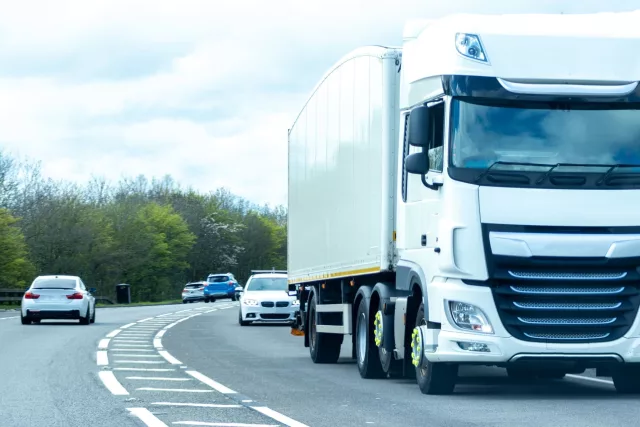
Higher speed limits are being introduced for HGVs in Scotland to help close the gap between them and other vehicles in a bid to make the country’s roads safer.
The Scottish government had been considering a number of options to reduce serious injuries and death on its roads, including reducing the speed limit for cars and vans.
Response
But following feedback from thousands of road users, it decided to increase the speed limit for HGVs on single-carriageway roads from 40-50mph and ditched plans to cut speed limits for cars and vans from 60mph to 50mph.
Instead, the government is aiming to improve safety by reducing the speed difference between HGVs and other vehicles by allowing the larger vehicles to go faster. It could also help reduce fuel cost at a time when many are juggling rising costs of repairs and HGV insurance and fleet insurance.
The Road Haulage Association – which has long called for an increase – also welcomed the move. Martin Reid, policy director for Scotland, Wales and Northern Ireland, told Fleet News: “This is tremendous news for Scotland’s road haulage industry. We believe it will make these roads safer, reduce emissions and help regional and national economic growth.
“We know through the trial on the A9 that when the speed differential between cars and trucks is reduced, it also reduces the likelihood of risky overtaking.
“We also know that lorries use less fuel and create fewer emissions when they can drive at 50mph.
“This change will also rebalance the competitive disadvantage faced by hauliers in Scotland, compared to those in England and Wales, because of the current 40mph trunk road speed limit.
“When journeys take less time, they create savings which can be passed on to customers, creating a positive ripple effect throughout the Scottish economy.”
Road deaths
The reason behind the changes is road safety and the Scottish government’s drive to reduce road deaths by 50% by 2030.
Cabinet secretary for transport Fiona Hyslop said: “The National Speed Management Review provides important evidence on how speed limits can help reduce road deaths and serious injuries and is helping us work towards our ambitious goal of making Scotland’s roads the safest in the world by 2030.
“The next steps have been informed by the huge number of responses to the public consultation.
“Work will be undertaken to further analyse the impact on road casualties and journey times of a speed limit change on different standards of single carriageways and this will inform any future transport policies.
“We are also going to start work now on the steps needed to increase HGV speed limits, recognising the consultation feedback and the positive results of similar changes from the A9 HGV speed limit trial and other parts of the UK.
“By reducing the speed differential between HGVs and other vehicles, this change is expected to enhance road safety by reducing driver frustration and improving journey time reliability.”
Action
The government is introducing the changes following a rise in the number of deaths on Scotland’s roads with figures showing 160 people died in 2024 – an increase of 13 on 2023’s figures.
Despite the rise in fatalities, Fleet News reports that the number of people injured on the roads fell from 5,838 to 5,576.
Ms Hyslop said: “We must never lose sight of the fact that one death on our roads is one too many. These proposals represent a vital step towards making Scotland roads safer.”
This consultation shows that while the Scottish government is rightly trying to reduce deaths and serious injuries on its roads, it has listened to people who use them every day and who will be affected by any changes.
By allowing HGVs to go faster, it not only improves safety, as pilot schemes suggest, it also makes journey times faster and reduces fuel consumption and pollution, which helps keep costs down and benefits the environment.