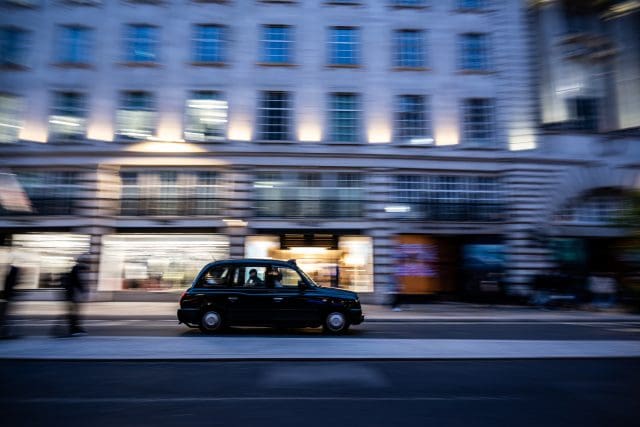
Taxi drivers are receiving special training to spot the signs of harassment and help people who are being targeted because of their race, gender, sexuality or ability.
The move follows a significant number of reports of hate crime in the capital – and across the UK – with research showing that 75% of people don’t feel safe during a night out.
In London alone, between September, 2024, and August this year, the Met received 21,000 hate crime reports, although this was down 17.4% on the 12 previous months.
Feeling safe
As a result, taxi company Freenow has partnered with Stop Hate UK to train drivers to spot signs of harassment so they can help passengers and protect themselves.
The BBC reports that the escalating situation meant people were scared to leave their homes and the fear of confrontation would make them cut short nights out, or avoid public transport.
Rose Simkins, chief executive of Stop Hate UK, said: “Everyone deserves to feel safe in public spaces — whether that’s during the day or on a night out. Sadly, this research shows that anxiety and vulnerability are still very real, especially among certain groups.
“Through our partnership with Freenow and the unique training we’ve delivered for drivers, we’re aiming to raise awareness and support those affected by hate crime. The funds raised will be pivotal in allowing us to develop an app exclusive platform to ensure that people can access support wherever they are.”
Taxi drivers are often the first port of call when people find themselves in a difficult situation, especially if they have been abused or harassed, and want to get somewhere safe as quickly as possible.
One of the Freenow drivers who underwent the training told the BBC how it will help keep passengers safe.
Spotting the signs
Brian McDonough said: “It makes the drivers aware of what to do in a situation that maybe they’ve not been in before, or they’ve been in before, but not dealt with it.
“The training involved assessing passengers as they got in the vehicle, especially women and vulnerable people that may have been the victim of harassment while they were out on the street, or had been followed by somebody at the station.”
Anyone who was visibly upset would be supported by drivers, and would be encouraged to contact the police or Stop Hate UK to report any incidents.
Londoner Yatna told the BBC she had been verbally abused by a man at a London Underground station and a taxi was her first port of call.
She said: “I would probably feel safer getting in a taxi because he’ll pick me up and take me home, whereas on a Tube, that guy could have got on the same Tube as me and followed me home.
“It is a bit more expensive, but then I think about my safety. I think I’d rather pay £30 than be assaulted or not get home.”
Threatened and intimidated
Freenow’s research found that 83% of people in the LGBTQ+ community felt threatened or intimidated while walking down the street and 65% of people from mixed or multiple ethnic backgrounds believe safety has worsened over the past 12 months.
Many reported receiving unwanted physical attention from a stranger more than once a month on average and nearly half of women (48%) felt uncomfortable due to someone walking closely behind them on the street.
Freenow UKI general manager Danny O’Gorman said: “Our research reveals just how widespread the issue of public safety is. We want to make it easier for everyone to get out and enjoy what their city has to offer, knowing they can get home safely. That’s why we’re proud to partner with Stop Hate UK and venues like Little Door and Co to create a more inclusive, supportive nightlife culture.”
Freenow has also teamed up with London-based hospitality company Little Door & Co on a “round-up” feature for Stop Hate UK, letting passengers and bar-goers round up their fare or tab. This allows drivers to access training to prevent discrimination and promote safe travel.
Taxi drivers are part of the communities they serve, and training such as this helps improve the service they offer. They can be a refuge for someone who has been a victim of harassment and needs to go somewhere safe. Licensing authorities could consider adding it to taxi and PHV requirements as a vital part of their safeguarding duties, along with background checks and taxi insurance.