As the used EV market continues to gather pace, the biggest concern for fleet owners and managers is battery performance, with many fearing that battery health will degrade to a level that leaves the with an expensive problem.
But research by EV battery specialist Generational has revealed surprising results that will be welcomed by fleets.
Going the distance
According to Fleet News, the study of more than 8,000 cars and light commercial vehicles found that even after eight or nine years, battery capacity remained at 85%, while vehicles aged four to five years maintained 93.53%.
The research – thought to be the biggest and most in-depth of its kind – compared vehicles from 36 manufacturers, with vehicles aged up to 12 and 160,00-plus miles.
Generational noted that most batteries have a warranty of a minimum of 70% for eight years or 100,000 miles.
Fleet News reported: “Generational’s data indicates that the vast majority of vehicles will comfortably outperform this, although a very small proportion does fall outside of warranty parameters and will likely result in claims.
“Generational explains that the data confirms that electric vehicle battery degradation is ‘not the systemic risk once assumed’, with uncertainty around condition now the principal determinant of used EV confidence, residual values, performance and risk.”
Good health
This means that for fleet operators, a three-year-old EV with 90,000 miles could have stronger battery health than a six-year-old vehicle with 30,000 miles.
Oliver Phillpott, CEO of Generational, told Fleet News: “The Generational Battery Performance Index definitively shows that EV batteries are performing far better than many consumers and industry stakeholders have been led to believe.
“With an average state of health of over 95%, and even older vehicles comfortably exceeding warranty thresholds, the underlying fundamentals are extremely strong.
“Transparency in battery condition is the main challenge facing the market today, and essential infrastructure for a healthy used EV sector; as vehicles age, the variance between the best and worst performers widens, and that dispersion defines risk.
“By establishing clear benchmarks for what is typical, above and below average as we look to drive further growth in 2026, we are giving the market the reference points it needs to price risk accurately, strengthen residual values and accelerate adoption.”
He added that in the majority of cases, EV batteries are likely to exceed the lifespan of the vehicle itself.
Testing time
Among the key findings from Generational’s research is that mileage alone isn’t a reliable predictor of a battery’s health. It found that EVs with more than 100,000 on the clock often have 88 to 95% battery health.
And transparency about battery health is going to be critical going forward because where there is any uncertainty, it is the worst-case scenario that will be assumed during a sale.
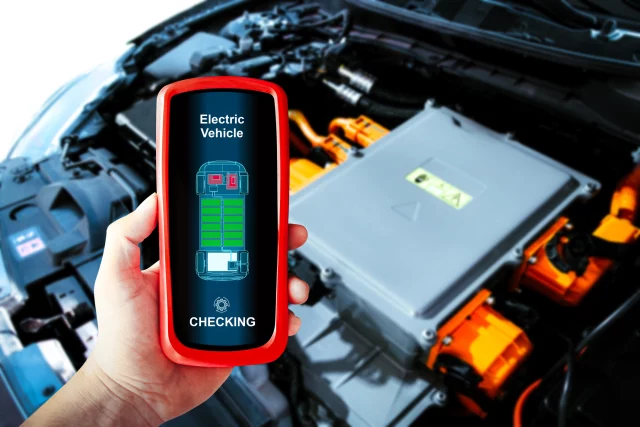
Generational noted: “Age and mileage alone are no longer sufficient valuation proxies. Battery condition is emerging as the defining determinant of long-term vehicle value, performance and risk. Battery testing is becoming essential market infrastructure.
“Like mileage verification or service history, battery condition transparency is fast becoming an expected part of the buying process rather than an optional reassurance.”
For fleet operators, certification of a used EV’s battery health gives them much more choice when it comes to selecting vehicles.
By introducing charging protocols and usage patterns, they can preserve and prolong the health of an EV battery so it not only continues to perform well, it also maintains value when they are considering a trade in.