Vehicle manufacturers are limited when it comes to producing greener cars, vans and lorries, but owners have much more choice to make their fleets green.
This is because they can choose different EVs or renewable-fuel options for different parts of their business – without compromising the service they provide. Sometimes it’s a one-stop shop, while on other occasions, they may have to find different solutions to achieve their sustainability goals.
Battery swap
In one of the most interesting options being developed, Fiat is looking at making EV batteries removable, meaning a dead battery can be swapped for a fully charged replacement in less than five minutes, similar to the deposit-and-return scheme in which propane and butane tanks can be ‘refilled’ at petrol stations.
The Shropshire Star reports that the Italian car maker is trialling the technology in Madrid with a fleet of its 500e city cars in partnership with Ample, which specialises in battery-swapping technology. In the trials, drivers order a fully charged battery via an app and swap it for the empty one at special swapping stations.
Olivier Francois, Fiat CEO and Stellantis, told the Star: “Guided by lateral thinking and a focus on simplicity, this new battery swapping technology reflects these values. It significantly reduces the fear of depleting battery mid-trip and dramatically cuts recharge time, delivering a seamless and effortless experience for drivers.”
The results of the trial will help determine whether the technology can be adapted for other vehicles.
Vegetable oil take-off
Air travel is recognised as one of the biggest contributors of harmful emissions and aviation site Airside has reported on steps being taken at East Midlands Airport to reduce carbon emissions by up to 90%.
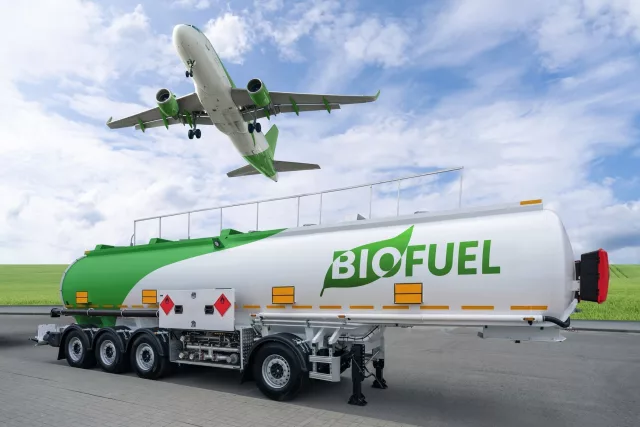
More than 60 vehicles are now running on biodiesel supplied by YourNRG, instead of fossil-based diesel.
Vegetable oil will be used to power more than 60 vehicles at East Midlands Airport, helping slash carbon emissions by up to 90% by running on biodiesel instead of fossil-based diesel.
Airside reports that the vehicle include those used by airfield operations and security, as well as fire engines and snow-clearing vehicles.
The switch will help East Midlands and others in the Manchester Airports Group – Manchester, London Stansted and East Midlands – transition to net zero carbon operations by 2038.
The airports’ biodiesel is produced from waste vegetable oils and fats which are treated and turned into renewable fuel.
Going greener and cooler
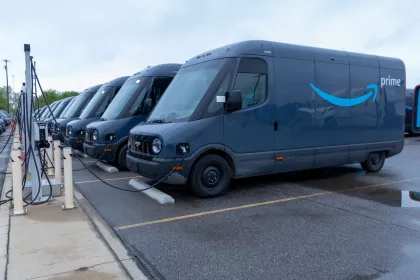
Meanwhile, Asda has invested £1.3 million to more than double its home shopping EV delivery fleet to 194.
Retail Week reports that the supermarket chain will add 112 home delivery vans to its fleet and by September, it will have 21 stores operating fully electric delivery fleets. These are expected to make one million EV deliveries, saving 1,700kg of CO2 emissions per year.
And the Isle of Wight news site Island Echo reports that a heating and cooling services provider is also making its fleet greener as it strives to reduce its carbon footprint.
Vectis Refrigeration Ltd, which supplies refrigeration, air conditioning, and heat pumps, is making the switch from diesel to electric vans in collaboration with Vehicle Consulting Solent.
Will Overton, founder and director of Vectis Refrigeration, told Island Echo: “We’ve always aimed to be a future-focused company.
“Switching to electric vehicles is a natural extension of our values – it’s about doing our part to protect the environment while continuing to deliver outstanding service.”
Paul Thorley, director of Vehicle Consulting Solent, said: “We are thrilled to support Vectis Refrigeration on their journey toward electrification. It’s fantastic to see a local Isle of Wight business leading the way in adopting electric vehicles into their business.”
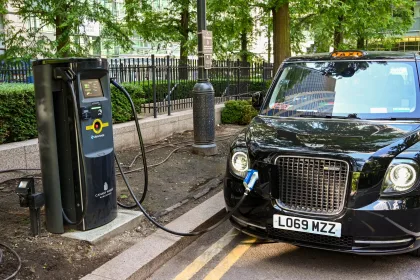
There are different EVs to fit different scenarios and needs but the development that could be the most important for taxi drivers is the removable batteries. If tests succeed, they could be in and out of a swapping station in the same time – or less – than it takes to fill a tank with petrol and diesel. This could be a gamechanger for those switching to EVs and, with less of a premium on batteries, there could also be good news when it comes to taxi insurance premiums.