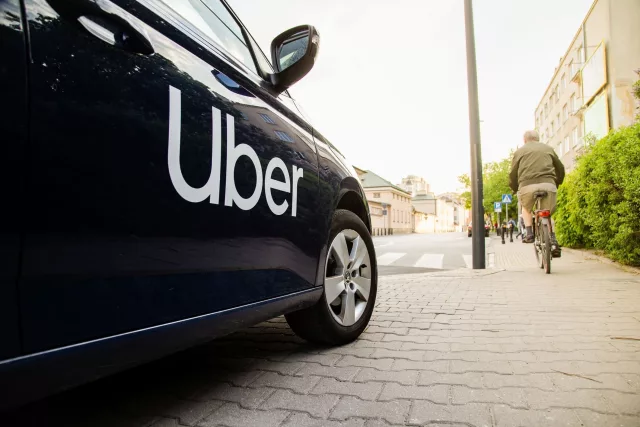
By rewriting its contracts with drivers, Uber avoided paying millions of pounds under the “taxi tax” announced in November’s budget, which would have made 20% VAT payable on private-hire fares.
As the Guardian reports, the ride-hailing company updated its terms issued to drivers from January, which means the technology firm acts as an agent, rather than as the supplier, of transport services outside London.
No ‘taxi tax’
This puts any VAT due on the fare the responsibility of the drivers to collect because the “contract” for the transaction is between the driver and the passenger.
The Guardian explains that as most drivers do not make more than the £90,000 VAT-registration threshold in a year, they will not have to charge VAT, and Uber fares outside London will avoid the 20% sales tax.
Transport for London rules do not allow the agency model to operate, which means Uber passengers in the capital will pay VAT on their fares.
Uber signalled its intent to change to the terms with its drivers since the budget announcement.
The Guardian reports that Andrew Brem, Uber’s regional general manager for the UK, said at the time: “The government’s action today to change the rules will mean higher prices for passengers in London, and less work for drivers, when people are already struggling with the cost of living … This decision also establishes the absurd situation where a trip in London will be taxed at a different rate than a trip anywhere else in the UK.”
Journey tax
Welcoming the introduction of VAT on taxi fares, an HM Treasury spokesperson: “Ending this use of a niche tax scheme by online minicab firms will both benefit everyday cabbies with a fairer tax system and raise money to help deliver the country’s priorities – cutting the cost of living, cutting waiting lists, and cutting debt and borrowing.”
By closing the Tour Operators’ Margin Scheme loophole on January 2, the Treasury expected to raise an extra £700 million a year from the taxi tax.
However, the contract changes have not been received well by drivers.
City AM reports that the company could be facing a mass exodus of drivers who could join rival firms or return to black cabs.
The site says it has seen documents which show a “wave of fury in private messaging groups”, with drivers urging colleagues to reject new terms that they claim turn them into “tax collectors” for the ride-hailing platform.
Standing its ground
Despite the apparent feeling among drivers, Uber told City AM the transition is a necessary alignment with the rest of the UK market.
And the company has said it is not seeing any disruption to services since the contracts were updated.
City AM said: “Uber insists that the change is a direct response to government policy aimed at keeping essential everyday transport affordable.
“Addressing concerns over take-home pay, Uber clarified that the new terms do not change the portion of the fare the platform keeps.
“It also insisted that they have not introduced variable commission as a result of the model change.
Contract benefits
“The firm also highlighted that drivers have access to free sickness and injury protection, parental payments, and free university courses.”
An Uber spokesperson told City AM “the vast majority of total fares go directly into drivers’ pockets and that the company is proud that thousands of drivers continue to make the positive choice to work on the platform as passenger demand continues to grow.
“All drivers receive a weekly summary of their earnings, which shows exactly what Uber and the driver received from trips.
“We are proud that thousands of drivers continue to make the positive choice to work on Uber as passenger demand and trips continue to grow.”