
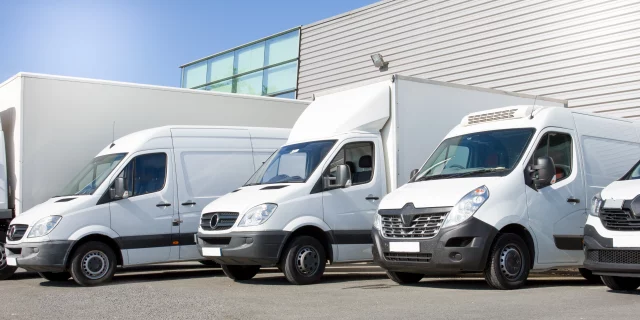
Managing more than one vehicle? Fleet insurance could be a useful solution to help cut costs and simplify the way you run your business.
In this guide, we’ll outline the basics of fleet insurance, including what it can cover, factors affecting costs, and how to get a quote.
What is fleet insurance?
Fleet insurance is a type of insurance that covers multiple vehicles under one policy, rather than insuring each one individually.
It’s primarily used by businesses and organisations that operate several vehicles for work or commercial purposes.
What businesses can be covered by fleet insurance?
Any business that operates multiple vehicles can be covered by fleet insurance. Common examples include:
- Delivery and courier services: companies transporting goods locally or nationally.
- Taxi services: taxi fleet insurance for public and private hire.
- Trades and contractors: electricians, plumbers, builders, or landscapers who use vans or trucks.
- Logistics and transport companies: lorries, trucks, or vans that transport goods.
- Specialist fleets: fleets designed for specific industries, such as construction, waste management, or refrigerated transport.
Fleet insurance policies can generally cover businesses with anywhere from two vehicles to several hundred, or even thousands. Each insurer sets its own rules regarding the minimum and maximum number of vehicles eligible for a fleet policy.
If you have a mixed-use vehicle fleet made up of different types of vehicles, they can also be insured under one fleet insurance policy.
What does fleet insurance cover?
There are three levels of cover for fleet insurance: Third Party Only, Third Party, Fire & Theft, and Comprehensive.
- Third-Party Only (TPO) is the legal minimum level of cover required. It protects your fleet if your drivers cause damage to someone else’s vehicle or injure a third party.
- Third-Party, Fire and Theft (TPFT) includes everything in TPO and protects your business if your vehicles are stolen or damaged by fire.
- Comprehensive covers everything in TPO and TPFT and additionally provides cover for damage to your vehicles.
Comprehensive cover is generally recommended for fleet owners because it protects against most accident scenarios, providing the highest level of coverage.
Additional cover
You can also take out additional cover depending on the needs of your business, including:
- Employers’ liability cover* – a legal requirement if you employ staff. It protects you if an employee gets injured at work and makes a claim against you.
- Public liability* – protection if a visitor or customer is injured on your premises by helping cover medical costs, legal fees, and compensation claims.
- Tools cover* – cover for your specialist tools and equipment.
- Trailer and carriage cover* – for protection against damage or injury caused while in transit.
- Breakdown assistance* – protects you if your vehicles break down by providing roadside assistance and vehicle recovery.
- Goods in transit* – cover for damage to any cargo that occurs while being transported.
*subject to t&cs.
The benefits of fleet insurance
Any business that relies on more than one vehicle could benefit from fleet insurance. Covering your company vehicles under a single fleet policy can offer a number of advantages, including:
✅ Lower overall costs – In many cases, a fleet policy works out cheaper than arranging separate cover for each vehicle.
✅ Simplified admin – Managing just one policy and renewal date helps cut down on paperwork and time spent on administration.
✅ Greater flexibility – Any individual who meets your insurer’s requirements can drive the vehicles in your fleet with Any Driver cover.
✅ Better future rates – Building a positive claim and driving history as a fleet can help you secure more competitive premiums in the future.
How much does fleet insurance cost?
It can be difficult to provide an exact figure for the cost of fleet insurance because every business is different, meaning prices can vary widely.
Insurance companies use a number of data points to assess risk and calculate your premium, including:
- Your fleet’s claims history and experience.
- The type of business you run.
- The size of your company and how many vehicles you have.
- The type of vehicles you want to cover.
- How your company uses your vehicles.
How can I get cheaper fleet insurance?
Typically, there are steps you can take to lower the cost of your fleet insurance, depending on your insurance provider.
For example, you could:
- Keep your vehicles secured overnight to reduce the risk.
- Hire drivers with a clean licence and good claims history.
- Provide training to your employees to promote safer driving.
How do I get a fleet insurance quote?
You can obtain a fleet insurance quote either by going directly to an insurer or by working with a specialist broker such as Patons Insurance.
Why choose a broker?
Using a broker to arrange your fleet cover can help streamline the process of shopping around for quotes, potentially reducing costs.
At Patons Insurance, we source and compare quotes for you to offer a suitable policy at a competitive price.
Our experienced sales and service teams have a strong understanding of the fleet insurance market, allowing us to offer informed guidance and arrange cover that’s tailored to your specific requirements.
Get started with your free, no-obligation quote today by filling out the quote form on our website or calling us on 0333 015 6886.