The wheels are in motion that could see card payments being made mandatory in Glasgow taxis.
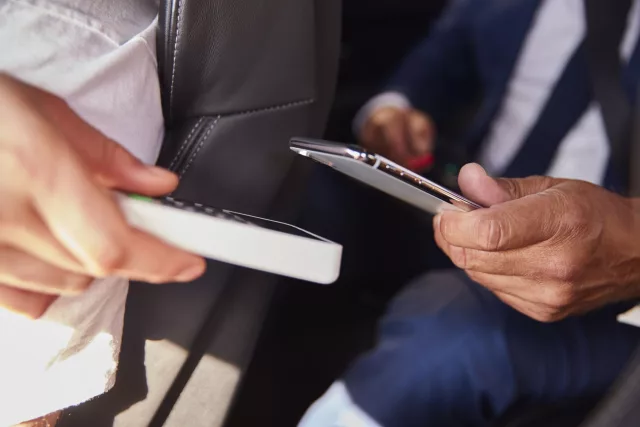
It comes as Glasgow City Council launched a consultation on whether hackney cabs in the city should be required to take credit and debit card payments.
Requests
Glasgow currently licenses 1,217 taxis and in what was traditionally a cash business, a number of operators already have card readers to accept electronic payments. Taxi Point reports that council officials have received “several queries” from members of the public as well as from operators about paying by card, and launched the consultation.
As more people rely on card and smart payments – and the number of bank branches and cash points decreases – electronic payments have become the norm for many businesses, including “a large share of work for some drivers in the city”.
Taxi Point notes that if Glasgow adopts the policy, it would become the first licensing authority in Scotland to make card readers mandatory in taxis.
The authority has made it clear that if the technology becomes compulsory, the trade, rather than the local authority, will pick up the bill for purchasing and maintaining the equipment.
Consultation
The consultation will be held on the council’s online hub and the authority wants to hear from the public as well as key stakeholder groups including the Taxi and Private Hire Car Trade Group, Police Scotland and Glasgow Chamber of Commerce.
Feedback from the consultation will be reported to the council’s Licensing and Regulatory Committee before any decisions are made.
A report to the council notes that the response from customers is likely to be that they rarely carry cash and instead they “rely on physical cards or smartphone wallets to pay for everyday services, including transport”.
Although it would be the first authority in Scotland to make card payments available in all taxis, drivers in cities such as London are already required to accept electronic payments.
Pros and cons
Drivers in favour of card payments say it helps them stay competitive with app-based operators.
Others reported that card payments make it easier to manage their income and expenses, and could be a particular benefit for end-of-year accounts with digital tax reporting coming into effect for self-employed workers.
The largest number of concerns about using the technology comes from taxis that operate outside big towns and cities, where mobile phone signal is unreliable. Drivers are concerned that they will not be able to get a signal in order to process a payment.
Even those working in cities reported difficulties accepting payments in dead areas such as multi-storey car parks.
And those who had not experienced technical difficulties were concerned that they were charged processing fees by card providers which comes out of their earnings and is in addition to the cost of fuel, taxi insurance and maintenance.
Another objection raised by drivers is that as sole traders, they should be free to decide how to run their business.
Catering for everyone
Mandatory card payments do not prevent taxi drivers from accepting cash fares. It means that they must be able to accept electronic payments for passengers.
There are pros and cons to both sides of the argument and while some drivers understandably feel strongly about being able to choose how to run their business, being able to accept card payments means they do not have to turn away customers who do not have the fare in cash.
There are legitimate concerns about signal coverage, as well as processing fees charged by card machine providers, but the way people shop and spend money has changed and businesses need to be able to respond to new ways of doing things.