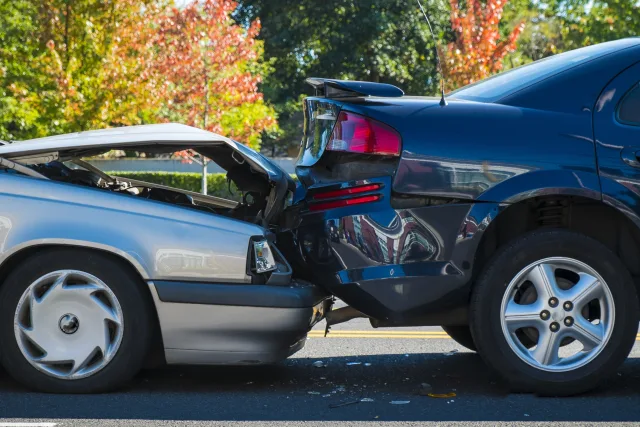
Whenever you are involved in a crash, safety always comes first. It is important to check whether there have been any injuries and call the emergency services if necessary.
When it is safe, the most important next step is to gather as much evidence as possible to give your insurance broker or provider the clearest picture of the scene and the events leading up to it.
As a professional driver, a fast and accurate claims settlement can help minimise your downtime, keep your repair costs down and get your vehicle back on the road as quickly as possible.
It is vital to include as much detail as you can to avoid claims being rejected and to make sure disputed liability is handled correctly.
It could be days, weeks or even months down the line that crucial details help determine liability, so having clear evidence about what happened is vital.
What happens when you drive without insurance
Drivers need at least third-party cover to drive on any UK road or public space. Driving without professional driver insurance is a serious offence, with severe penalties ranging from £300 and six penalty points on your licence, to a driving ban and unlimited fine if the case goes to court.
Police also have powers to seize uninsured cars and have them crushed.
If your vehicle has been hit by an uninsured driver, safety and evidence gathering remain the priorities, but there are other steps involved to protect yourself and your business.
Determining whether the other driver is insured forms part of collecting their details, which should include their name, address and the name of their insurer.
Gathering evidence and exchanging details
It is an offence not to share contact details with third parties following a collision and insurers such as Admiral recommend that you contact the police if other parties are hesitant or refuse to give information.
It is also an offence to fail to stop after an accident and if you are the victim of a hit-and-run driver, it is important to gather as much evidence as possible for the police and your insurer.
You should record the make, model, colour and registration of the other vehicle, as well as any damage.
Photos play a crucial role and taking pictures or videos of damage and vehicle locations can help insurers determine who was at fault.
Dashcam footage and independent eyewitness accounts and contact details are also crucial in establishing what happened.
Again, it is important to ensure all evidence is stored safely as you may need to refer to it in the future.
Report everything
Any vehicle collision that results in injury or damage should be reported to whoever is stipulated in your policy within 24 hours. Even if you are involved in a minor collision and are not going to make a claim, you should still make your insurer aware.
By relaying the registration of the other vehicle involved, your insurer will be able to check the details of the registered keeper, as well as any insurance in place.
You can also find out whether a vehicle is insured by checking the DVLA’s online vehicle check service or by going to the Motor Insurance Database for a £10 fee.
The good news is you can claim on your insurance if you are hit by an uninsured driver as long as you have a comprehensive policy. Vehicles with only third-party, fire and theft (TPFT) or third-party only (TPO) policies mean you have to claim compensation via the Motor Insurers’ Bureau.
Many policies include the uninsured driver promise which means that if you are hit by an at-fault uninsured driver, it won’t affect your no-claims bonus. Details might vary between insurers, but drivers need to provide the vehicle’s make, model and registration of the other vehicle involved.
If you’re at fault
In the event that your vehicle hits an uninsured driver, you must tell your insurance provider. You need to do this whether or not the other party is insured and even if you don’t intend to make a claim.
If you are at fault, the insurance status of the other party doesn’t matter. You still risk having a claim made against you, which could result in losing your NCB unless you’ve protected it.
You may also pay a higher price at renewal.