
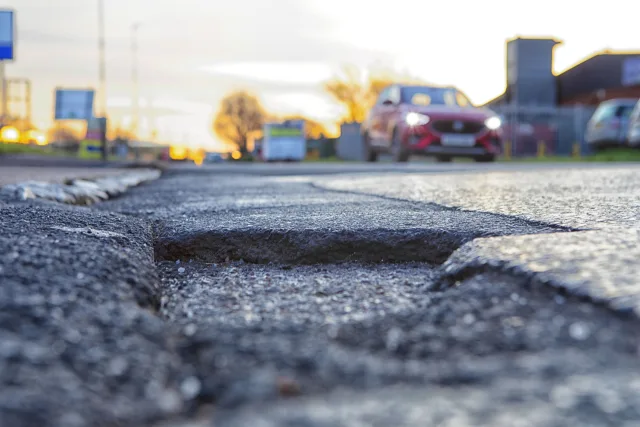
Potholes continue to drive motorists around the bend, not only in damage to vehicles when you hit one, but also in long delays while roads are inspected and eventually repaired.
While contractors carrying out physical repairs remains unavoidable, AI technology is being used to regularly scan roads in a bid to spot defects before they become problems.
Keeping on top of maintenance will help more drivers steer clear of insurance claims for damage, and help highways authorities reduce compensation pay-outs to motorists.
Early detection
Highways Industry reports that being able to spot defects sooner not only avoids damage to vehicles, it can also reduce the cost of repairing the road.
It said: “Traditional inspections still rely heavily on people looking, recording and then deciding what matters most. That works, but it is slow, expensive and unavoidably patchy across large networks.
“AI pothole detection offers something more systematic: cameras gather the raw image, software spots likely defects, and engineers can spend more of their time deciding what needs treatment rather than searching for it in the first place.
“Roads deteriorate in stages. If authorities catch fretting, cracking and localised failure early, they can patch or resurface before the carriageway breaks up into the kind of defect that damages vehicles and generates compensation claims.”
Digitally mapping road networks in this way means local authorities know the condition of the roads — and potentially the severity of defects before they cause issues — and don’t have to wait for motorists to ring the pothole hotline to report it.
Strategic approach
Highways Industry added: “Instead of sending crews out mainly for reactive patching, they have a better chance of planning treatments before the damage spreads. On a local road, that could mean fewer short-lived repairs. On the strategic road network, where closures carry a bigger traffic penalty, it can also mean less disruption if work is scheduled before a surface worsens.”
As well as improving maintenance budgets, it increases maintenance worker safety, reduces lane closures and the knock-on effect on journey times and allows authorities to prioritise repairs.
While AI is continuing its journey to improve the roads network, the size of the pothole problem needs £5.5 billion to fill it, according to vehicle manufacturer Citroën.
It is calling on the Government for a “national road repair standard, more use of AI to find defects earlier, tighter control of utility company street works and a five-year funding plan for local roads”.
Highways Industry notes that the French marque says better maintenance could reduce fatal or serious road crashes. It can also cut congestion and bring down the cost of vehicle damage linked to defects.
Better approach
Citroën believes that our roads and budgets would benefit from a strategic national approach which focuses on planned maintenance rather than reactive repairs.
This means that in every local authority, defects are assessed, prioritised and addressed in the same way, with repairs lasting the same length of time whether you are in Dover or Darlington.
As well as ensuring utility company repairs match the required standard, Citroën believes that £5.5 billion over five years will create a level playing field across the roads network and focus on prevention rather than cure.
Highways Industry said: “Britain’s local roads problem is no longer just about how many potholes are filled each month.
“It is about whether the system is set up to stop the next ones forming. That means drainage, timely surface treatment, properly inspected reinstatements, and budgets that last longer than the weather.”
Britain’s potholes problem won’t go away and it will take serious effort and money to reach the point where local authorities focus on maintenance and prevention rather than more-expensive emergency repairs.