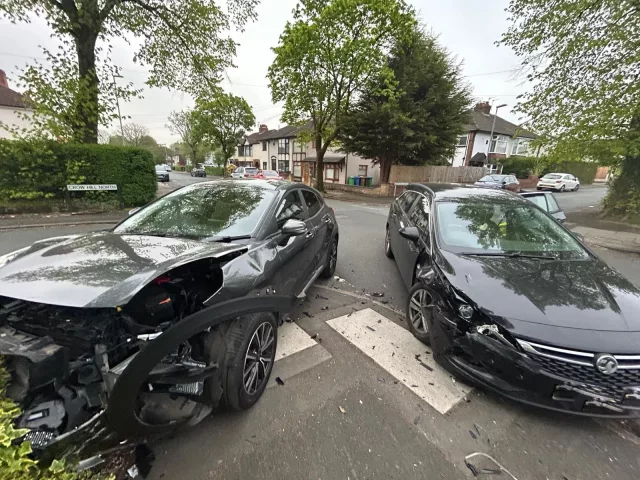
Accidents happen, but most collisions that occur on our roads are due to the fault of at least one driver.
Professional drivers spend more time on the roads that the average motorist, which increases their risk of being involved in a crash.
But by avoiding what the emergency services call the “fatal five” causes of death on our roads, professional drivers can reduce the risk of being involved in a crash in the first place.
Devon & Somerset Fire and Rescue (D&SFR) explains the fatal five and what drivers can do to steer clear of them.
1 – Careless driving
Whether you are travelling only a short distance or hundreds of miles, it only takes a brief lapse of concentration to cause a collision, either changing lanes on a motorway, bumping into the vehicle in front in traffic, or a pedestrian stepping into a road.
The unexpected can happen, but in order to give yourself the best chance of avoiding disaster, D&SFR says: “To be safe on the road, you need to concentrate at all times.
“Examples of dangerous behaviours to avoid are driving too close to the vehicle in front; not giving way at a junction; eating or drinking at the wheel; under-taking or dangerous over-taking.”
Any driver who causes a collision because of careless driving will receive up to nine points on their licence, an unlimited fine and a possible driving ban.
2 – Drink and drug-driving
Driving under the influence of drugs or alcohol impairs a driver’s reactions and judgement and can have fatal consequences.
D&SFR says: “This is why it carries serious penalties, such as a driving ban, a criminal record, in some cases a conviction on your licence (that will be visible to employers if you drive for work), and up to 14 years in prison if you kill someone when drink or drug-driving.”
It advises people who are looking forward to having a drink to make a plan to get to and from their destination without having to drive themselves or others.
It adds: “Don’t accept drinks if you’re planning to drive, and don’t offer drinks to someone who you know will be driving. Do not get a lift with someone who is under the influence – your life is just as much at risk as a passenger.
“The only way to be truly safe when driving is to not drink at all, however, you should still know the legal limits. Be aware that the next morning, you could easily still be over the limit.”
It gives examples of the minimum times that have to have passed before you can safely drive again, which may shock people.
For three large glasses (250ml) of wine, drivers should wait at least 11.5 hours before getting behind the wheel.
For four pints of 4% lager, it’s at least 10 hours and 20 and for three pints of 6% lager it’s a minimum of 15 hours.
3 – Not wearing a seatbelt
The advice from all the emergency services is to always wear your seatbelt, whatever distance or speed a vehicle is travelling.
Not only is it against the law to not wear a seatbelt in vehicles where they are fitted, in the event of a crash, the forces involved can cause serious injury and even death if someone is thrown around a vehicle’s cabin or ejected from it during a crash.
The simple act of buckling up can save lives. And it’s important to make sure that everyone travelling in a vehicle is wearing a seatbelt because an unrestrained person can seriously injure themselves and others in the event of a crash.
4 – Speeding
Speeding is something most people do every day, often without realising it, or assuming that a couple of miles over the speed limit won’t matter.
But the faster a vehicle is travelling, the more damage and injury it causes in the event of a crash.
To help stick to the speed limit, D&SFR recommends that drivers make a habit of checking the speedometer regularly and check speed-limit signs. In the absence of posted limits, the Highway Code reminds drivers that street lights in build-up areas mean 30mph until the next sign with a different limit.
In order to avoid breaking the 30mph, D&SFR also advises driving in third gear.
And even when driving the speed limit, you should always drive appropriately for the conditions, including traffic, weather and visibility
5 – Distracted driving
One of the biggest causes of crashes on roads today is drivers being distracted by mobile and hand-held devices.
D&SFR says: “It only takes a brief glance at your phone for a fatal accident to happen. Whatever it is will still be there when you’re in a safe place to answer it — safely parked, off the road, with the engine switched off and the keys out of the ignition.”
While the use of hands-free kits is legal, they can still cause a distraction.
Drivers found guilty of using a hand-held mobile phone when driving face a £1,000 fine (£2,500 for PCV or goods vehicle) / disqualification and six points on their licence.
The advice is to switch off phones while driving to avoid distraction and temptation.
Reassurance
Apart from suffering injury themselves, a driver committing any of these five (and other) offences may find it impacts their livelihood as a professional driver and cause difficulty finding future employment in a similar role.
Whatever the cause of an accident — and ensuring you have not committed one of the “fatal five” — taking out professional driver insurance through insurance brokers such as Patons provides peace of mind that you will be back on the road quickly, without expensive repair bills.
For the best protection, it is important to have the right insurance in place, not the cheapest. Otherwise, the cost of getting your vehicle and livelihood back on the road may rest entirely with you.