You have likely heard the terms ‘taxi’ and ‘private hire vehicle’, but what sets the two apart?
While both involve transporting passengers for a fare and both are often informally referred to as ‘taxis’, there are important differences between them. These include how and where they work, how they pick up customers, and the insurance requirements that they must meet.
If you’re considering a career in passenger transport, one of the first choices you’ll need to make is whether to become a taxi or a private hire driver. As a specialist taxi insurance broker, we’re here to help you understand the key distinctions between public and private hire work.
What are public hire taxis?
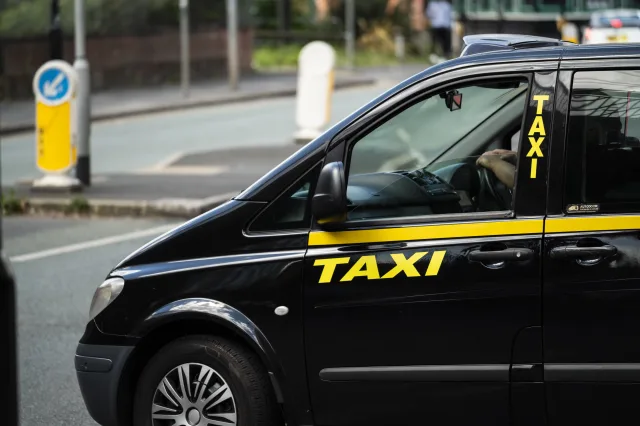
Public hire taxis – also known as Hackney Carriages or black cabs – are licensed vehicles that can legally pick up passengers who hail them on the street, wait at designated taxi ranks, or prebook them. These vehicles are typically easy to identify through official markings such as illuminated ‘TAXI’ roof signs and licence plates issued by their local authority.
In most cases, public hire taxis can only operate within the area of their licensing authority. There can be exceptions, for example, a taxi can usually undertake an airport transfer outside of its licensed area, provided the journey begins within the authority that issued its licence.
What are private hire vehicles?
Private hire vehicles (PHVs), also sometimes referred to as minicabs, can only carry out journeys that are booked in advance through a licensed operator. Unlike public hire taxis, PHVs cannot legally pick up passengers without a prior booking. They are also not permitted to pick up passengers from taxi ranks.
Some private hire drivers work for local bases or are signed up to ride-hailing apps. Passengers typically book their journeys through a booking office, website, or mobile app, and a driver is then assigned to the trip.
Currently, licensed private hire drivers and vehicles are permitted to work outside their licensed area, provided the operator, driver, and vehicle are all licensed by the same local authority.
Key differences between public and private hire insurance
All taxi and private hire vehicles need to be covered by taxi insurance as a legal requirement. Taxi insurance covers you to transport passengers in exchange for payment (also known as ‘hire and reward’).
Public hire insurance and private hire insurance are different types of taxi insurance cover.
Public hire taxi insurance is for taxis that can be flagged down on the street or picked up at a rank without a booking.
Private hire insurance is specifically designed for drivers who only transport pre-booked passengers. This includes minicabs and drivers who work with ride-hailing Apps like Uber and Bolt.
When you take out private hire cover, you are not insured to pick up passengers without prior booking or pick up passengers from a taxi rank.
Final thoughts
Both public hire and private hire driving can offer rewarding careers with flexible working opportunities. When thinking about whether you want to become a taxi or private hire driver, understanding the key differences between the two will help you choose the path that best suits your goals.
Get a taxi insurance quote
Your taxi or PHV is more than just a car – it’s your business, and therefore your livelihood.
At Patons Insurance, we take the hassle out of finding cover by comparing quotes from our panel of insurers, helping you secure suitable protection at a great price. That means less time spent shopping around so you can focus on what matters.
Start your fast, free, and competitive quote today through our website or call us on 0333 015 6886.
💡 Want to know more about taxi insurance? Read our beginner’s guide.