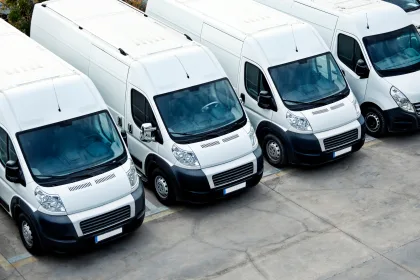
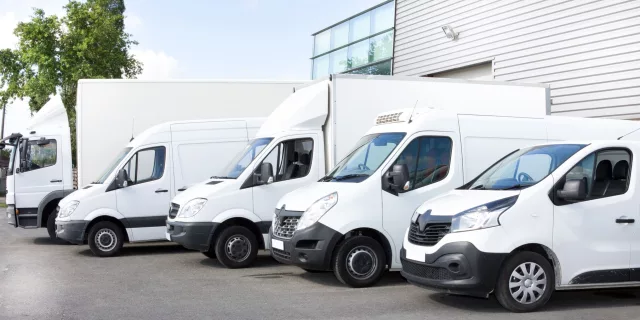
Businesses that operate a fleet often have different types of vehicles for specific tasks. They can range from everyday workhorses to specialist niche vehicles that are used less frequently. Each one plays an essential part in the operation of a business, and it is vital that the right insurance is in place in the event any vehicle needs to be repaired or replaced following an unforeseen accident.
The benefits of fleet insurance
For businesses operating more than a couple of vehicles, a fleet insurance policy makes administration simpler, more efficient and cost-effective.
Some fleets will utilise a mixture of vehicle types to carry out their business operations. For example, a company with products in a large warehouse is likely to have a fleet of vans to collect supplies and deliver goods, as well as machinery such as a forklift, cherry picker or crane to move stock, and cars for sales staff.
Using each of these vehicles comes with its own risks and legal requirements that the business must comply with. Without the right cover in place, an incident in which a vehicle is damaged or causes damage or injury, could affect your entire operation.
Taking out individual policies for each vehicle would be a heavy administrative burden and could also be more expensive. That’s where fleet insurance comes in. Fleet insurance providers offer policies for a range of fleets, from businesses that use a couple of cars to larger fleets that use hundreds of different vehicles.
Levels of cover
A fleet insurance policy is a much more efficient form of cover than insuring each vehicle individually. To enjoy the full benefits of it, you must start by understanding how covering a mix of vehicles affects the risk. This includes the different purposes of each vehicle, the distances they travel, the cargo they carry, and where they are operated.
Policies can be tailored to include different levels of protection within the same cover, which might see you take out comprehensive protection for a high-value delivery van, while a less frequently used car might have a lower level of cover. This means the insurance reflects the actual risks and needs of the fleet, rather than standard cover for every vehicle.
As with taxi insurance and private motor insurance, the different levels of cover are third party only, which meets the legal minimum, third party fire and theft, and comprehensive protection. Choosing the right level for each vehicle helps you balance cost with security – you might pay more to cover the high-value delivery van carrying expensive products than you would for an electric buggy that is used by staff to get around the warehouse.
Additional cover
Mixed-vehicle fleets also have the option to take out additional policies, such as windscreen replacement, courtesy vehicles, or cover for equipment being transported at the time of a collision. Replacing a damaged windscreen is essential for your delivery van, but you might not want to bother swapping the cracked plastic windscreen of the warehouse buggy.
How fleet insurance offers flexibility
As with standard fleet policies, named-driver cover can suit small fleets with fewer drivers, while any-driver cover offers flexibility for larger businesses.
For mixed-use fleets, any-driver cover not only helps protect your assets, it can also improve operational efficiency. If you had a named-driver policy and the named drivers were unavailable, you would be stuck, but any-driver cover means you can get on with daily functions.
A mixed-use fleet policy also gives your businesses the opportunity to be flexible with your operations. It is easy to adjust cover levels or add new vehicles or extra drivers. This means that if you are looking to grow your business, or have a surge in demand, you are not being held back by transport limitations.
As with any cover, you need to weigh up the cost with the practical operations of your business – how much would it affect you to wait for the named driver to be available, compared to the cost of an any-driver policy?
Some insurers use telematics which track driving behaviour, location, and mileage to calculate risk and improve safety, efficiency and, ultimately, cost. As well as encouraging safer driving habits, it can identify areas where fuel consumption could be reduced. The data can also be used when it comes time to discuss terms at renewal.
How to find the right cover
When it comes to insurance, cost matters, but the most important thing is to get the best level of cover you can afford. Choosing the cheapest insurance policy could mean your business faces higher losses following an incident, so you should always aim to balance affordability with the right protection. This is why working with an insurance broker that understands mixed-use fleets can help you find that balance and the necessary extras, rather than paying for features that add little value.
Managing a mixed fleet is an ongoing process that should involve regular discussions with your insurer, especially if your circumstances change. It could be extra staff or vehicles being taken on, longer journeys to meet the needs of a new customer, or anything else that could mitigate or increase the level of risk you are exposed to.
Having the right fleet insurance not only gives you a safety net that matches the complexity of how the fleet works in the real world, it also covers you legally in the event that something goes wrong.
Having the wrong cover in place could be a disaster for your business, but having the right mixed-use fleet cover means you are not only protected, you can also enjoy the stability it brings to allow you to focus on growing your business.
Looking for a fleet insurance quote? Get in touch with our expert team on 0333 015 6886 or fill out our online quote form to get started.