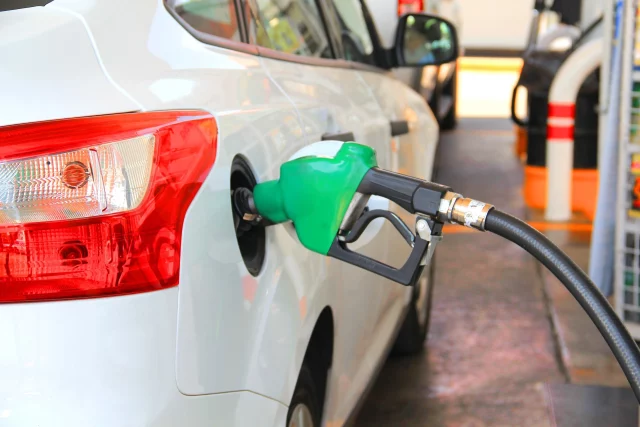
It doesn’t seem to take much for fuel prices to rise and the latest conflict in the Middle East has dramatically pushed up prices at the pumps to levels approaching those last seen following Russia’s invasion of Ukraine in 2022.
While financial experts advise people to car share or work from home, for people who drive for a living, neither of these are options – nor is taking a fuel price hike on the chin.
Shop around
Before the US launched its offensive against Iran, the average price for a litre of unleaded was 132p and 142p for diesel. According to RAC Fuel Watch, the average price of unleaded is currently 154.45p a litre, and diesel is 185.23p. Worryingly, the RAC expects both of these to continue rising.
This means that taxi drivers and fleet operators currently face a daily balancing act between finding the cheapest fuel and increasing their costs as necessary, without driving away customers.
Various apps and comparison sites make it easy to find the cheapest fuel near you. It is also worth maintaining eco driving and avoiding heavy braking and accelerating to help conserve fuel.
For those with EVs, the conflict has seen energy prices rocket as well, with experts warning the next energy price cap could add £300 to household bills.
Simon Williams, head of policy at the RAC, told the Guardian: “The oil price has been consistently above the $100 a barrel mark this week, so unfortunately, further rises look all but inevitable going into next week. With many people heavily dependent on the car, the pressure on household budgets is beginning to intensify.”
Global cost
The Independent reports that the conflict has caused prices to soar close to those seen in June 2022, when a barrel of oil peaked at $119 at the early months of the Ukraine war.
The crisis has been exacerbated by attacks on oil refineries as well as a blockade of the Strait of Hormuz which normally sees 20 per cent of the world’s gas and oil pass through.
AA president Edmund King told the Independent: “The longer this conflict goes on, the more effect it will have on the cost of oil.
“Any time Brent Crude passes 100 dollars per barrel raises concern across the markets, for the haulage industry and drivers.”
It warned that the Energy and Climate Intelligence Unit think tank research shows “oil trading at 100 dollars a barrel typically results in petrol prices of about 150p per litre, while oil hitting 120 dollars a barrel means petrol prices of about 170p per litre”.
Uncertainty
The longer the crisis continues, the worse it is for motorists and households.
Tristan Hann, director of Somerset-based company JTS Snacks told the BBC: “It’s demoralising and hard for the business and it’s starting to affect us. We’ve said to our drivers, if you see cheaper fuel at the pumps, then fill up.
“I’m sure we will be OK in the end as it’s not at the levels of 2022 fuel prices.
“But prices are starting to inflate across the food chain which is tricky to navigate.”
Agriculture has also been affected by the price of red diesel, which has a much lower fuel duty rate than normal diesel.
Somerset farmer Jeremy Padfield told BBC Radio Somerset: “It’s going to put a lot of pressure on farmers and food prices, food inflation will have to go up to make it sustainable.
“If the conflict is over quickly then it will be fine. But if this is longer-term, as it’s been such a wet winter, we need to look ahead as this will affect us.”
The hike in prices at the pumps puts further pressure on professional drivers and transport firms which have to find the most economical way to keep their vehicles on the road.
Drivers can take steps to mitigate the increases, but it is hoped that the conflict is resolved quickly so that fuel costs can begin to drop again.