Drivers face severe penalties for using a mobile phone at the wheel, but it is also an offence that can land their employers in trouble.
Solicitor Talal Malik is an expert in motoring and licensing laws and offers his advice on how drivers and operators can maintain the needs of their business, without breaking the law.
This issue of using mobile phones and similar equipment while driving should not be viewed solely as a matter of individual driver behaviour.
Operators also have regulatory exposure where their systems, expectations or working culture encourage unsafe device interaction.
An operator may not physically compel a driver to touch a phone while driving, but dispatch design and commercial pressure can materially influence behaviour.
And operators who treat mobile device use casually may find that a single incident leads to a broader review of compliance and public safety.
Systems that require drivers to respond quickly to detailed on-screen offers, review multiple data points while moving, or engage with passenger messages during a journey create foreseeable risk. Where an operator finds themselves subject to review following an incident, the licensing authority may examine not only the driver’s conduct, but also the operator’s policies, training, app configuration, supervision and response to known risks.
A written mobile device policy is useful only if it reflects operational reality. It should prohibit handheld use while driving, require devices to be securely mounted, make clear that devices must not obstruct the driver’s view, and confirm that drivers must not read, type or respond to booking or passenger information while moving.
But the policy must also be reflected in dispatch systems, driver onboarding, refresher training, disciplinary processes and the operator’s own expectations about acceptance rates and response times.
Technology may assist where used properly.
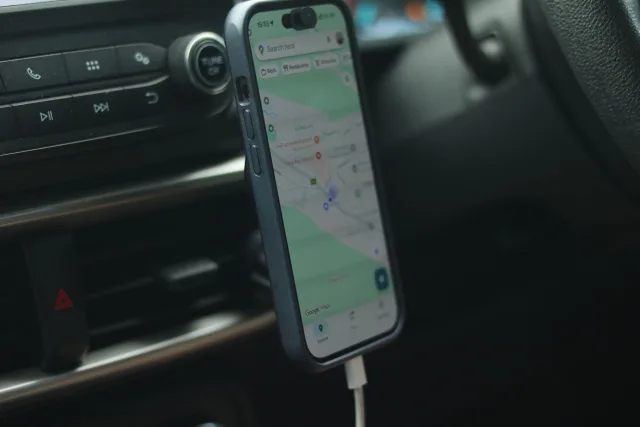
Voice prompts, audio job allocation, auto-accept functions, built-in vehicle systems, Apple CarPlay, Android Auto and properly positioned mounts may reduce risk.
They do not remove the underlying legal test. The driver remains responsible for control of the vehicle. The operator remains responsible for ensuring that its operating model does not generate avoidable public safety concerns.
The practical implications are significant.
These issues commonly arise after a roadside stop, a police report, dashcam footage, a passenger complaint, an insurance incident, or a licensing authority review.
An operator whose dispatch arrangements are said to encourage driver distraction may need to demonstrate that its systems are designed around legal compliance and public safety, not merely commercial efficiency.
Talal specialises in transport regulatory and licensing law, including representation before licensing sub-committees, Traffic Commissioners and appellate courts and tribunals. He represents drivers, operators and transport managers facing investigation, licence review, refusal, suspension, revocation or public inquiry arising from mobile phone use, app-based working practices or wider compliance concerns.

Contact Talal Malik at Transit Legal
Mobile: 07380 147535
Email: [email protected]
Web: transitlegal.co.uk