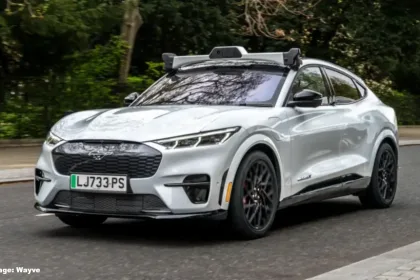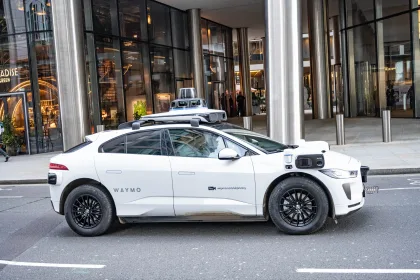
Chinese firms are “at the forefront” of the global autonomous driving industry – but finance experts believe taxi drivers still have a vital role to play.
Analysts believe China is in pole position to take control of a market worth £30 billion a year, attributing the position to advanced digital infrastructure and consumers’ enthusiasm for new technologies.
Business site Silicon reports that HSBC analysts now believe the global autonomous driving industry and are “approaching an everyday reality”.
Global leader
In its study, HSBC said: “China is at the forefront of the global autonomous driving industry, aided by better connectivity, well-developed 5G infrastructure and a consumer base more open to autonomous driving.
“Robotaxis are fast approaching an everyday reality, albeit within strictly controlled parameters.”
Analysts also expect autonomous vehicles to generate an additional £22 billion a year through logistics and delivery services, but they don’t write off the vital function of taxi drivers. Although their report found a human driver makes up 70% of the cost of a taxi fare, replacing them with AI is not cost free or even cheap.
The report said: “We challenge this logic as it seems to ignore the cost of fleet management, such as cleaning, charging, parking and security, much of which is handled as a secondary function of the driver.
“In addition, there is the cost of artificial intelligence inference, data handling, teleoperators and likely higher taxi insurance costs, at least initially.”
Taking these costs into consideration, HSBC believes it will robotaxis need to operate for at least seven years before they are likely to “break even on a cash flow basis”.
Queueing up
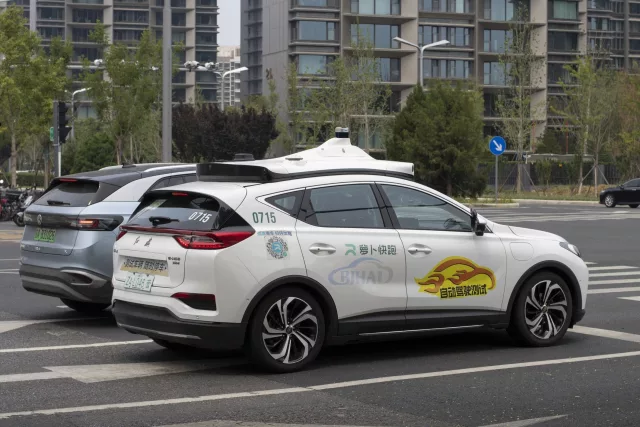
Silicon reports that there are multiple autonomous driving companies operating in large Chinese cities. The biggest is Apollo, the self-driving unit of tech giant Baidu.
It adds that Apollo operates hundreds of driverless taxis across 35 percent of the roads in Wuhan, while in other cities the vehicles operate in more limited areas.
As demand increases, Texas-based Tesla is applying for a licence to operate robotaxis in China, state-run China Daily reported last year.
Meanwhile, Baidu has partnered with American firm Lyft to deploy Baidu’s Apollo Go autonomous vehicles across key European markets.
Lyft revealed initial deployments are planned for Germany and the United Kingdom next year pending regulatory approval. It expects this to scale to thousands of vehicles across Europe in the following years.
“Our partnership with Lyft to deploy Apollo Go in Europe, starting with Germany and the United Kingdom, is a significant milestone in our global journey,” said Robin Li, co-founder, chairman, and CEO of Baidu.
Collaboration
“This collaboration represents our commitment to making autonomous mobility accessible worldwide while working with local partners who understand their communities. By integrating Baidu’s cutting-edge autonomous driving technology with Lyft’s platform reach and operational expertise, we’re excited to deliver safer, greener, and more efficient mobility solutions to more users.”
David Risher, Lyft CEO, said: “Our partnership with Baidu is all about creating a great customer experience. Their extensive track record operating the world’s largest autonomous ride-hailing service means we can bring all the benefits of AVs — safety, reliability, and privacy — to millions of Europeans.
“It’s part of our hybrid network approach, where AVs and human drivers work together to provide customer-obsessed options for riders. And importantly, we’re committed to working hand-in-hand with local regulators to ensure we deploy these vehicles in their communities in a smart, thoughtful way that benefits everyone.”
While the technology is developing rapidly, it is clear that some passengers prefer to be driven by a taxi driver rather than a robotaxi, and that there are several vital roles taxi drivers carry out that AI can’t do – or can’t do cheaper.
It is interesting and reassuring to hear the firms behind the technology talk about hybrid operations, rather than a future in which robots take over the taxi industry.