Motorists in Wales face tougher fines for leaving engines idling in a move that will affect professional drivers as well as residents.
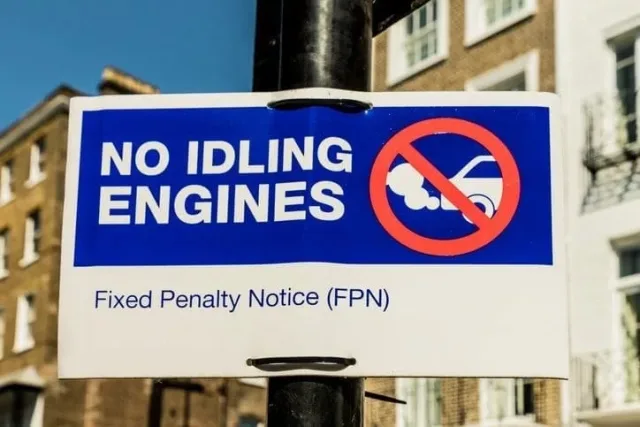
Welsh authorities are leading the clampdown against pollution by increasing the penalty for engine idling from £20 to a maximum £150.
The move has been introduced to target high-risk areas such as schools, hospitals, GP surgeries, care homes and other healthcare facilities.
But it will also affect professionals such as taxi drivers, and fleet drivers waiting for fares and deliveries at sites including schools, supermarkets, shops and restaurants, especially as the temperatures start to plummet.
The law regarding engine idling
Rule 123 of the UK Highway Code states that drivers must not leave a parked vehicle unattended with the engine running or leave a vehicle engine running unnecessarily while it is stationary on a public road.
Penalties and enforcement are left to each council to determine. In this case, the Welsh government has decided to raise the bar and increase the penalty from the UK minimum £20 to £75 and up to £150, depending on the circumstances.
Prof Isabel Oliver, chief medical officer for Wales, told the BBC air pollution is a serious public health issue that contributes to a range of conditions including heart and lung disease.
Protecting the vulnerable
She said: “Children, older people and those with existing health conditions are particularly vulnerable to its effects. Idling may seem like a small, everyday habit, but it adds up.
“Every time an engine is switched off rather than left running, we reduce the amount of harmful pollution in the air we all breathe, particularly around schools, hospitals and other places where vulnerable people spend time.”
Llyr Gruffydd, cabinet minister for rural resilience and sustainability, said raising the penalty will be a “stronger deterrent” for motorists.
“We really do feel we need to step up here, clamp down on this as a problem and make sure we protect people’s health and generally it will make communities a better place to live in.”
He hoped higher fines would “change the habits of people who are polluting communities and are putting children and vulnerable people’s health at risk”.
Paying the price
Fines for engine idling were introduced to reduce exhaust emissions released into the air which are bad for the environment and are linked to asthma and other lung diseases.
Rule 123 of The Highway Code states that councils can issue fines “only if a motorist refuses to switch off their engine when asked to do so by an authorised person”.
It does not apply to vehicles waiting in traffic or being de-iced.
While fines start at £20 for drivers who refuse to comply, they can increase if they are unpaid and councils can also operate separate penalty charge notices, such as in the City of London, which start at £80 and rise to £160.
Because enforcement arrangements and penalties can vary locally, it is important to check the rules in place in an area, especially if taxi drivers or delivery drivers are visiting somewhere unfamiliar to them.
Otherwise, they risk an expensive bill on top of rising fuel, taxi insurance, fleet insurance and motor insurance premiums.
Advice to drivers
In a bid to reduce pollution and avoid fines, the RAC has the following tips for drivers, wherever they are travelling.
It says: “Try to consider how long you are going to be stationary in traffic. The RAC recommends that motorists turn off their engines if they don’t think they’ll move for around two minutes.
“Most modern vehicles have ‘stop-start’ systems fitted that automatically switch off the engine when the vehicle is stationary and restart it as soon as the accelerator is pressed. Manufacturers allow this feature to be manually switched off, but we urge motorists not to do this. There is no risk to your vehicle in allowing this feature to be left on.
“For vehicles without ‘stop-start’ it’s fine to turn off your engine, but you should try to avoid doing this repeatedly in a short space of time. In addition, older vehicles (around eight years old) and vehicles with older batteries (around five years old) may struggle if started too often in a short space of time.”
Driving change
In a bid to improve traffic-related pollution, the National Institute for Health and Care Excellence (NICE) is urging local authorities to consider introducing zones which clamp down on emissions.
As part of this drive, it recommends ‘no idling zones’ where officials can monitor vehicles around schools and busy shopping areas.
The RAC adds: “If motorists can start making small changes today, it will help to improve air quality for everyone and potentially reduce the likelihood of charges having to be imposed on certain vehicles entering urban areas.”